Writer/director Rachel McMurray hits refresh on the conversation around domestic abuse through her play Shadow of Doubt.
Every day we are confronted with news stories of intimate partner violence and coercive control that have escalated to the point of no return, but getting inside the mechanics of how the abuse begins necessitates a larger story than what headlines provide. The escalation is often so incremental and subtle that when the red flags have unfurled completely, lives are enmeshed, women are isolated, and “just leave him” is impossible.
McMurray has written between the headlines and fleshed out a story that offers a window into some of the lives behind the victim toll counts tracked by organisations like Australian Femicide Watch/The Red Heart Campaign. While her play about a young white middle-class couple in first-world colonial Australia doesn’t address the vast range of victim experiences, it certainly enumerates many universal signposts of coercion and abuse that are recognisable across a broad scope of contexts.
Of course, the language around these signposts are often characterised as ‘buzzwords’ or ‘therapy speak’: gaslighting, narcissism, love-bombing, boundaries, minimising, deflecting, projecting, weaponising— we use them in everyday conversations. Awareness has been adequately raised around abuse in intimate relationships to enable us to spot it in the relationships around us, which begs the question, how does it continue to happen?
When you’re in the middle of it, you can’t see it.
Shadow of Doubt makes this abundantly clear with a methodical, almost forensic plotting of points along this couple’s story. It progresses slowly and chronologically, takes side steps into a courtroom, and then retraces its steps to reveal new information and a more complete picture.
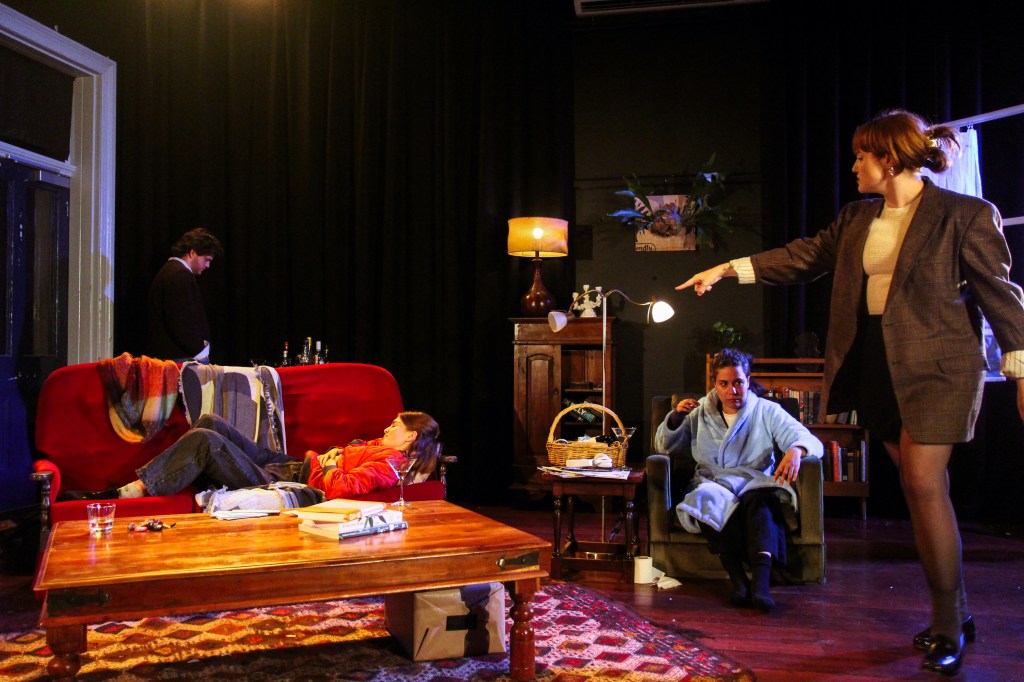
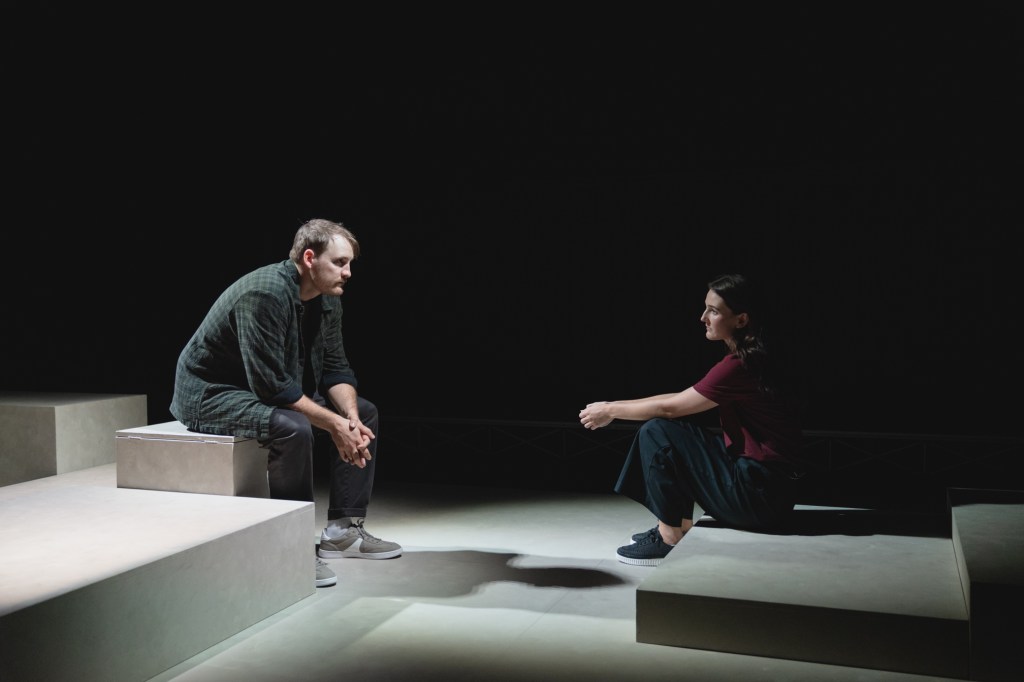
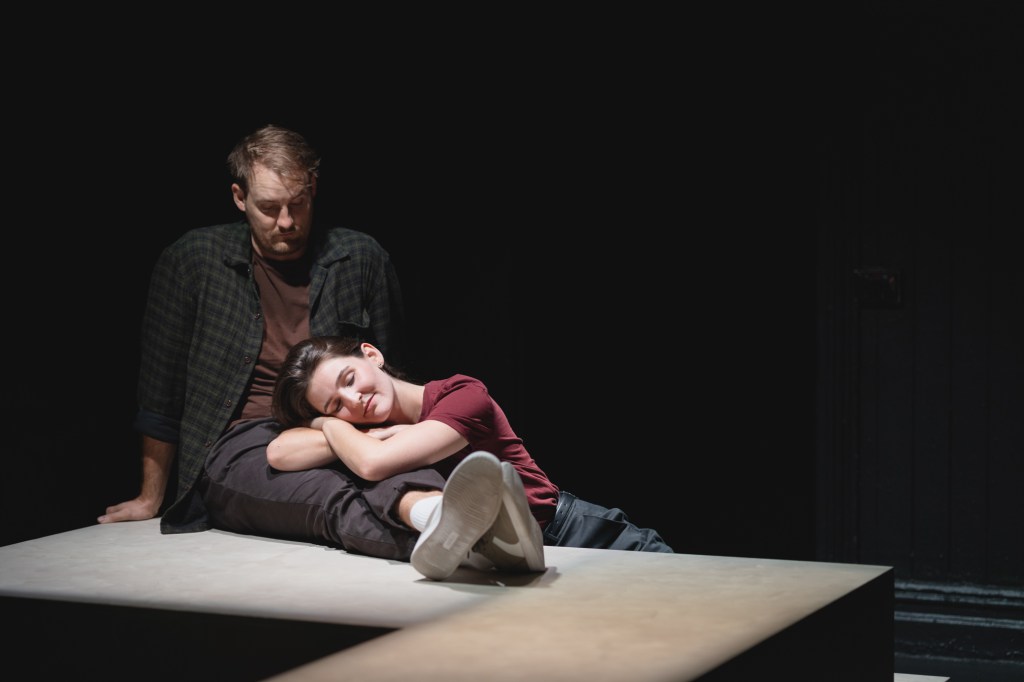
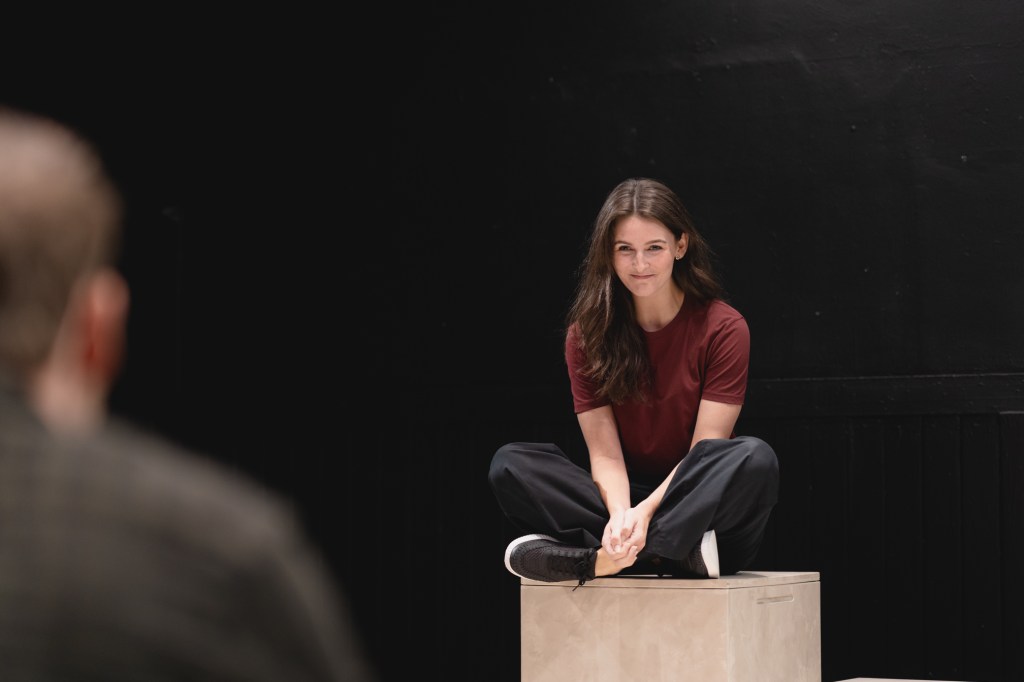
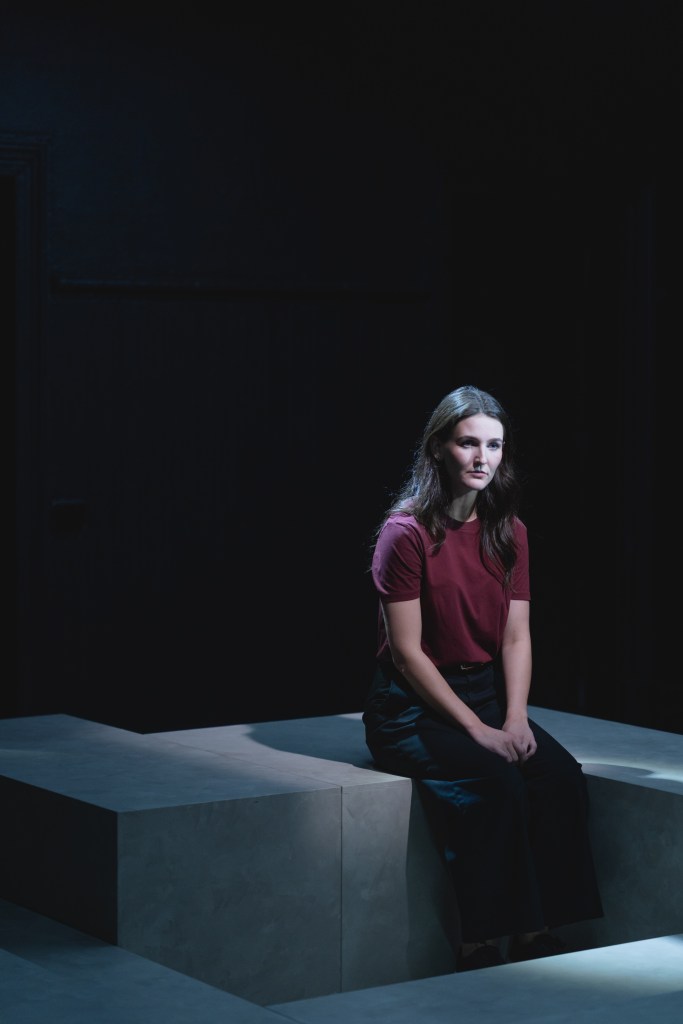
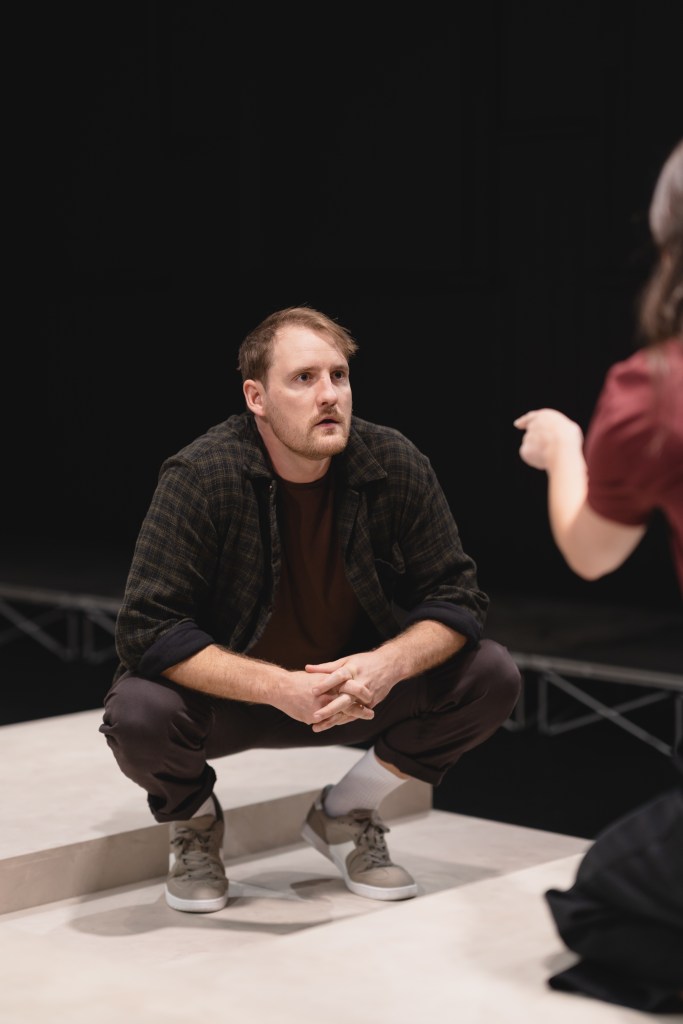
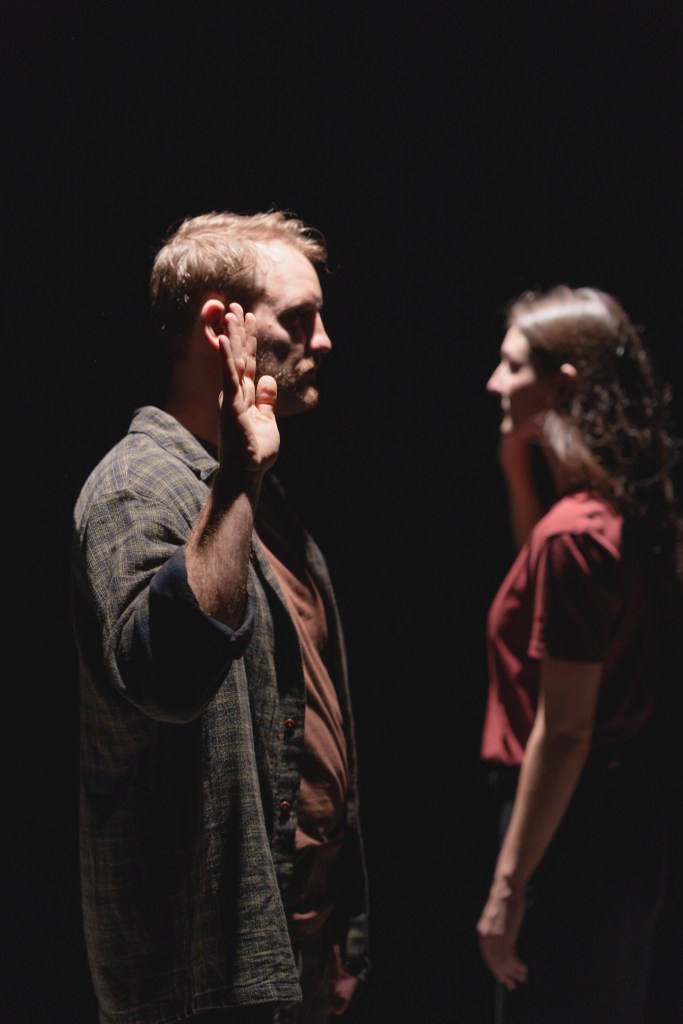
Performers Lainey O’Sullivan and Nathaniel Langworthy tell the story with an equally methodical approach; their characters are full, real, attuned, and balanced. They demonstrate the victim/abuser dichotomy by skillfully shifting from restraint to heightened emotion in their performances. McMurray’s direction is taut with sharp physical punctuations in scene transitions that send jolts of electric currents through the dialogue-heavy piece. O’Sullivan and Langworthy move almost constantly over the minimalist but conscientious multi-level set by Jake Pitcher. Their constant shifting unsettles the viewer, conveying a visceral but subconscious nervousness beneath the story’s surface.
Lights from Mick Rippon are focused perfectly on each level and block, going flexibly from wash to spot to create separate states for home and courtroom while leaving enough darkness for the actors to also briefly play devil’s advocate (lawyers) when necessary. Music and sound by Rebecca Riggs-Bennett completes the show’s holistic picture with ambient noises, nature sounds, and music that enhances feelings without dictating them.
Shadow of Doubt is a fine piece of independent theatre that will not only resonate with audiences but perhaps also open their eyes to things that go too far and too long hidden in many relationships.
CICELY BINFORD
Shadow of Doubt by Rachel McMurray and Fine Comb Theatre is presented by The Blue Room Theatre from 15 Apr – 3 May. For tickets and more information, click here.