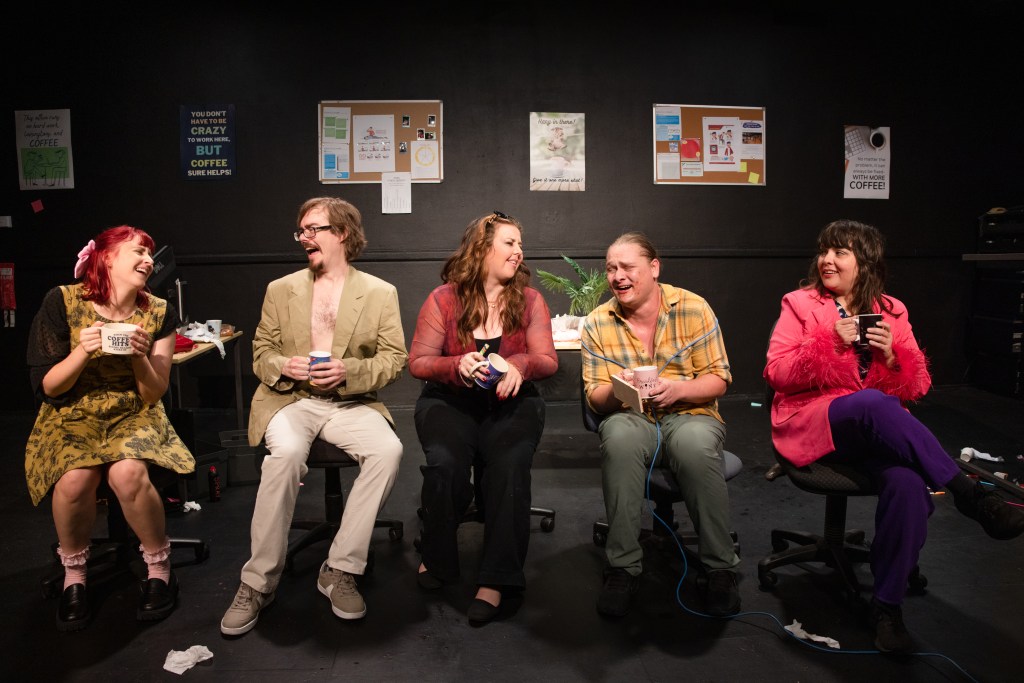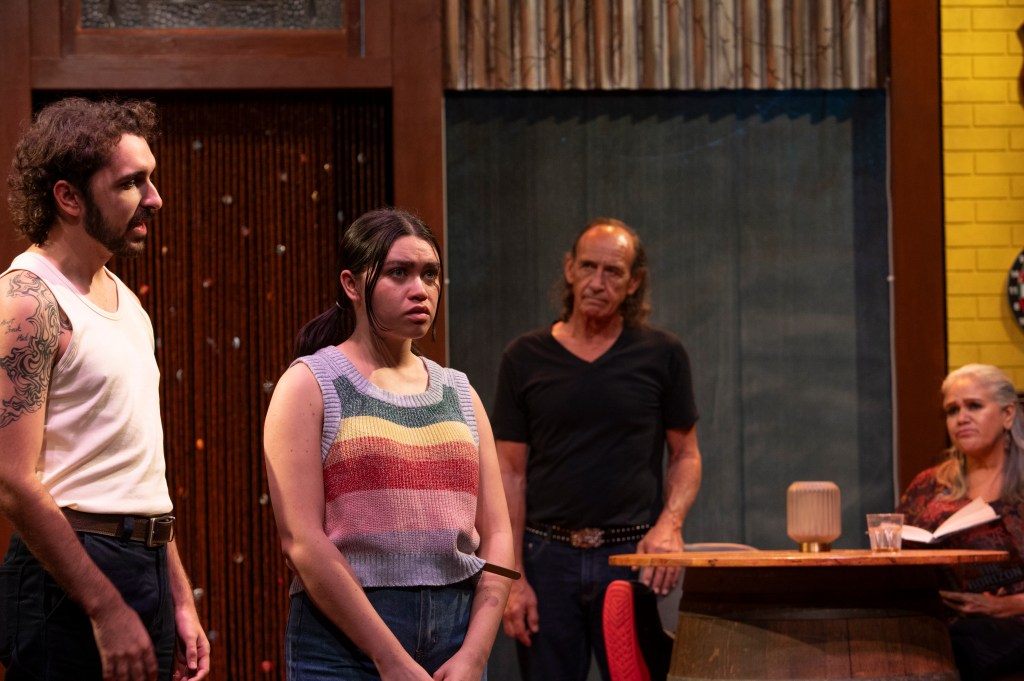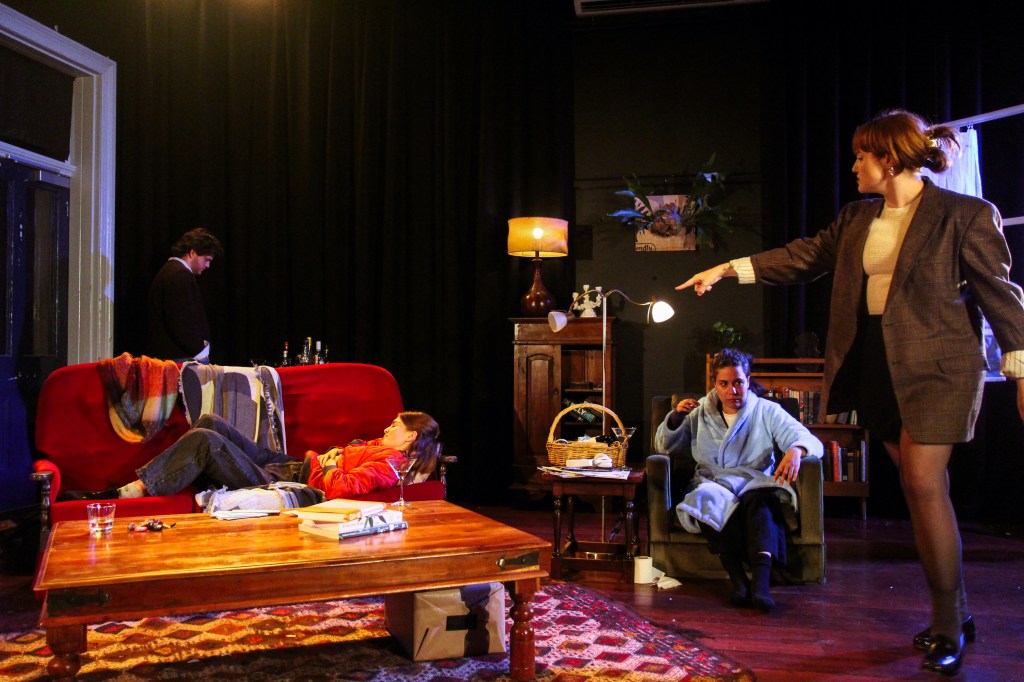
Playwright Barbara Hostalek has dedicated years to developing her craft, writing stories told with sympathy about characters who persist in spite of their very human flaws and with the odds stacked against them. Her latest play, Thirst, a comedy about a pop star returning to a regional town to run a tavern, opens Yirra Yaakin Theatre Company’s 2025 season. This will be her second script to be produced in a Yirra Yaakin main season, as well as the second one developed through the company’s vitally important Yirra Yaarnz Writers’ Group. Hostalek offers some generous insights into how Thirst came into being, the themes and ideas that inspired her, and what it means to have her work produced by Yirra Yaakin.
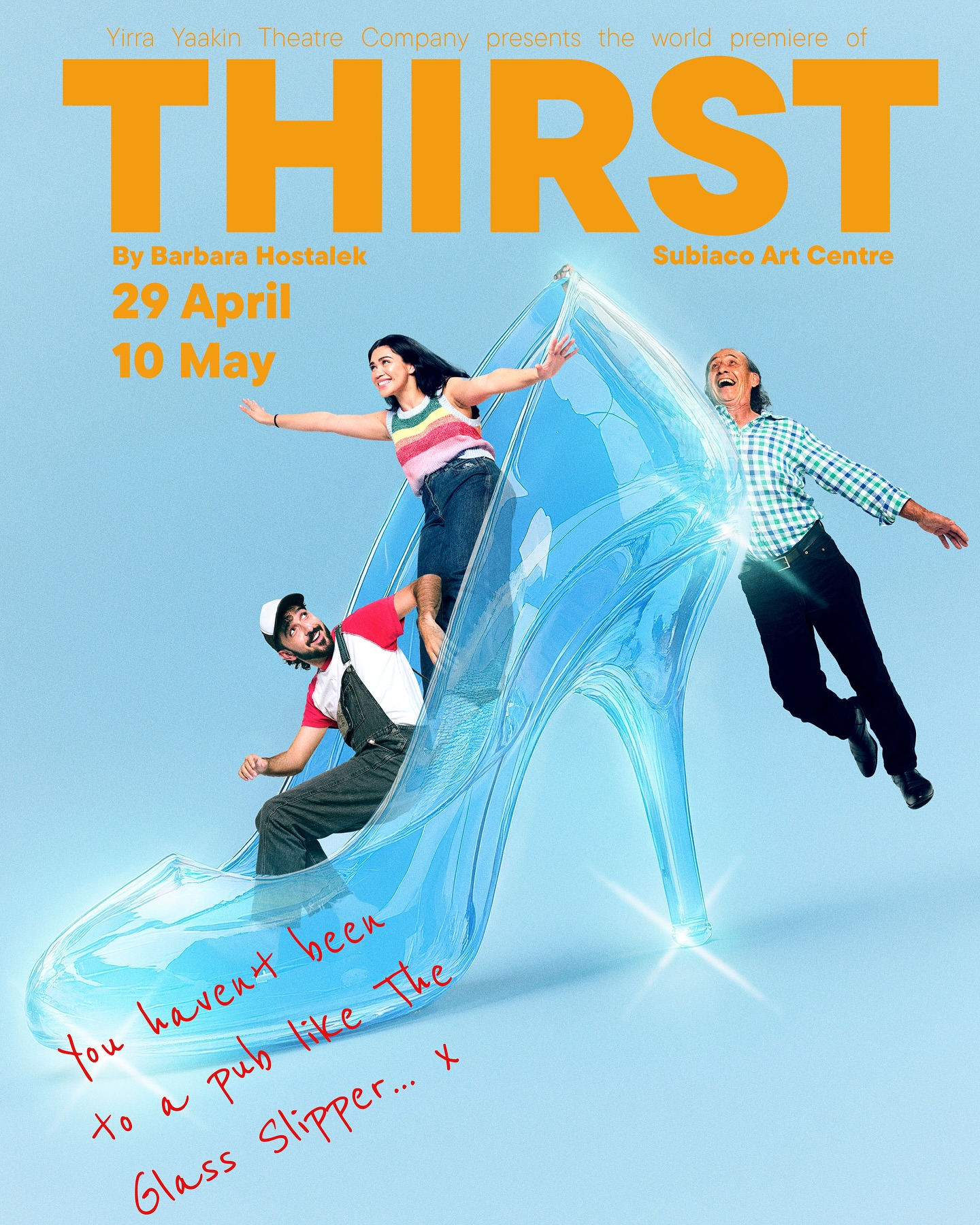
Yirra Yaakin Chair Debra Miller has said that each play in Yirra Yaakin’s 2025 season poses an important question to be answered. What important themes does Thirst explore?
People’s intrinsic motivations are human connections and belongings, intertwined by free will and choice to make decisions to stay, leave and return.
Thirst explores why people leave, stay, or return to small towns. What inspired you to delve into this theme?
When Thirst was developed as a seed idea during the Yirra Yaarnz Writers’ Group, the facilitators Polly Low, Hellie Turner and Geoff Kelso always encouraged writers to write ‘what burns in your guts; if you don’t get it out, you’ll burst…’. Thirst was written after Yirra Yaakin premiered my first main stage production, Cracked. Cracked was initially developed in the Yirra Yaarnz Writers’ Group back in 2015, so by the time Thirst bubbled to the surface, I was ready for a comedy, always up for romance and I love the innovative ways of how people live industriously.
Thirst started as a 10-minute play and with Yirra Yaakin Playwriting Festival it was able to be developed into an over 60-minute play. I love the use of dramatic writing to create worlds and characters based on multifaceted aspects of my lived experience and observations of human behaviour in all their ugliness, beauty, strength, vulnerability and ultimately, dreams and hope!
The play challenges stereotypes of Aboriginal people as business owners. Can you tell us more about the way this idea unfolds in the story?
Our society’s quality of life needs workers, all sorts of workers, to do all sorts of jobs. I come from a family of hardworking women and men on both sides of my family. My Mim (Nanna) worked right up until she was in her 70s as a private and commercial cleaner and she gave a lot people, who couldn’t get jobs anywhere else at that time, opportunities to feed themselves, their families, and continue to take pride in themselves and keep going.
Work of any nature requires effort, a bit of luck, and support. Just like learning, you can’t pass a closed-book exam without being able to recall information to get the marks. Business, like learning, is all about motivation and need. And when you hit snags, thinking outside the box to overcome challenges and obstacles. A business is never built off one element alone and it takes so much effort to keep the doors open.
How does Thirst reflect your own experiences?
A lot. But I find the greatest freedom using fiction and theatre for performance to provide relief from the, for me, sometimes mundane and rational realities of human existence. I feel very fortunate to have a play I have loved creating be brought to life. It is a marvellous opportunity as a writer for an Artistic Director to pick up a script and believe in championing the piece to production. For me there are no words to describe the super-sensory and visual aesthetics of seeing a production team bring [my script] to life, using all their skill and craft to entertain audiences in that short moment of connection watching a show.
The title Thirst is evocative – what does it represent in the context of the play?
Thirst is a sensation or desire caused by the body’s need to maintain proper hydration levels. I’m using it as a response to ‘dig deep into human motivations for behaviour,’ exploring various ways that motivation can be stimulated and the outcomes of that impacting on personal ambitions and relationships.
As a young person growing up, when I had opportunities, it meant I would have to sacrifice things I knew really well, leave my home town, move away from family, miss out on things. Like when I left Darwin to study to be a vet at Murdoch University. A long degree of five years, content-driven, and focused on maths and science. Sometimes I doubted myself and the decision I made; my family are very close, they didn’t understand why I would move away, away from them. But I had a thirst to learn, a keen interest in maths and science and in using medicine to help animals and people. My life force ground.
You developed Thirst through the Yirra Yaarnz Writers’ Group. How did the program shape the play’s journey?
My family is very diverse. I know that there are so many stories and storytellers in me as well as my family that are yet to be heard, yet to be shared, yet to be told. Having the dedicated time and space to meet with highly experienced theatre professionals and learn the skills of creating plot, story, central questions takes practice, commitment and opportunity. In my day-to-day life it is hard to find time to dream and create stories, and having the writers’ group really allows for skill development and focus to tell the story you want to share.
From beginning as a 10-minute play the script then was able to be developed further using dramaturgy, I have been fortunate to have two dramaturgs in the progression of Thirst, Polly Low and Luke Hewitt. They have championed my writing, and supported in asking me lots of questions about choices and decisions, some of which have sparked priceless bits of dramatic action being infused in the script, beyond initially thought.
Luke Hewitt has brought a lot of physical comedy into the dialogue and personal behaviours of the characters, with a strong focus on the setting and characters in the space. However, every opportunity to work with actors and have a rehearsed reading has also allowed for deeper reflection. Actors with directorial support have provided invaluable assistance in expressing and sharing what works well, what needs to go – you can hear it’s repetitive, or it’s too didactic, or that it makes no sense, or “I’m confused,” and it has made all the difference.
What was the most challenging aspect of writing this play, and what came most naturally?
Most challenging aspect was receiving the rights to use the music. It takes time to select the music and if you don’t get the rights, you have to come up with new music, and we went through this process a few times. Thank goodness for Luke Hewitt and his huge repertoire and patience for song selections, and for Maitland Schnaars bringing some classic Australian artist hits. Sometimes the use of music in plays is tricky; it can date the piece and confuse audiences and the storyline.
Music selection is harder for me but I believe my Mum would be super proud of this play. She would sing a lot in the car when we went on fishing trips and when she was in a good mood, particularly Neil Diamond’s “Sweet Caroline,” which we played at her funeral. So the opportunity to have rights to this song is very special for me and, I hope, for my family as well as you, the audience.
Thirst is touring to Kwinana, Karratha, and Roebourne. How do you think both regional and Boorloo/Perth audiences will connect with the story and what do you hope audiences they take away from Thirst?
I hope they get out of it what they want. I am always keen to hear from my audience, especially if they can connect with the characters or some of the themes of life. Ideally, I hope they have a bit of fun, laugh a bit, sing a bit, reflect on what they love and why they love like they do.
I have had so much fun writing and working on this play, and I really hope that audiences leave with light hearts and smiles filled with joy. Maybe we can meet at a karaoke night…
As a playwright, what stories are you most passionate about telling in the future?
I love stories which champion the defiance of stereotypes of racist and discriminatory behaviour. I want to showcase the little voice creating big change, or the small person who lives for a bigger life. But mostly, I want to share stories with hope; we all need it.
What advice would you give to emerging Aboriginal writers looking to develop their own voices in theatre?
Nothing happens without effort. Do …do … do! Write, write, write and share your work with people you trust to get your confidence up. I believe there are lots of supportive writers’ groups but there is only one Yirra Yaarnz Writers’ Group. Join up and I look forward to writing with you.
PERTH ARTS LIVE
Thirst by Barbara Hostalek will be presented by Yirra Yaakin Theatre Company at Subiaco Arts Centre from 29 Apr – 10 May 2025. For tickets and more information, visit here.