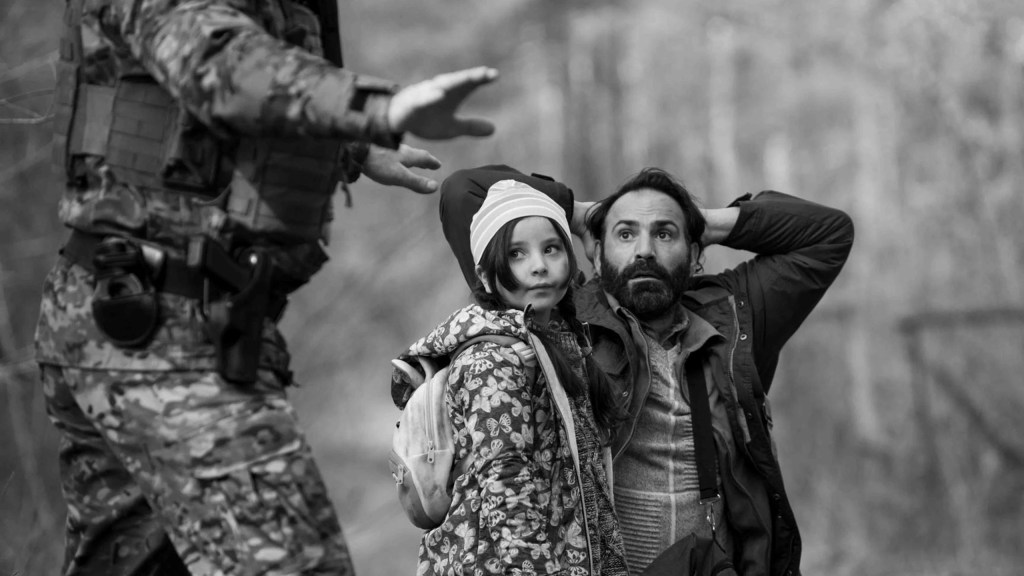
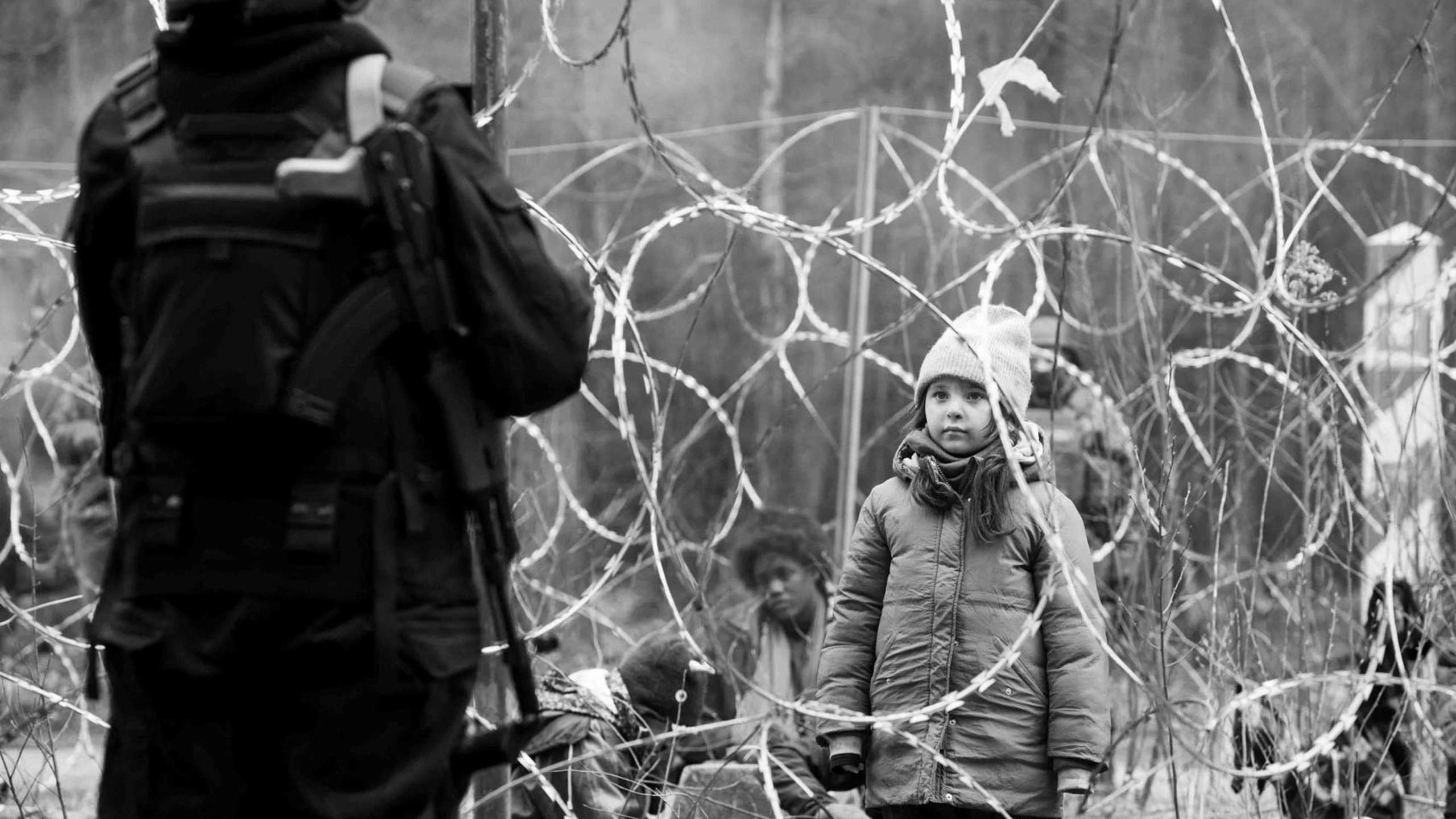
Watching Green Border (written by Maciej Pisuk, Gabriela Łazarkiewicz-Sieczko and directed/co-written by Agnieszka Holland) was an undeniably harrowing experience. It’s a haunting and poignant movie, and while it discusses migration issues in the EU, it is markedly important for Australia and its ill-perceived “refugee problem.”
Like a large meal or a night out drinking when you don’t realise just how full or drunk you are until you stand up, so too does this movie hit hard, even after it ends. I had been telling myself I was okay, but when I stood up, the somatic pressure of all the emotions built up whilst watching the movie became known, and I struggled not to cry… again.
The movie follows a family escaping torture in Syria at the hands of the Assad regime. Along the way, they meet other refugees. They are going to Belarus so they can sneak across the border into Europe with the help of family and the Belarusian government, whom they wrongly think are supportive of them doing so when, in fact, they are being used as pawns against their neighbours, Poland. Their dreams are dashed when they end up in the world’s most deadly and inhumane game of Pong. They cross the border into Poland only to be beaten back into Belarus by the Polish soldiers. They are then beaten back by Belarusian soldiers who rob them blind, and on and on it goes as the injuries and deaths mount up; pregnant women are thrown over barbed wire fences, babies and children die, and the guards, whether they be Polish lackeys or Belarusian-Russian lackeys, mock and jeer them.
Along the way, we are introduced to other characters: a Polish solider who is not as racist as the other officers and a Russian-born psychologist living in Poland. We follow their story arc as they slowly come to terms with the Polish democratic fascism they are a part of, by choice or not. These two characters are vital to understanding some of the film’s central messages. For the soldier, he is told that there is no higher duty than serving his country. What is left out here is that there is a higher duty than unthinkingly serving the ruler of some arbitrary lines on a map—the duty of serving humanity and human dignity. Slowly, he comes to see the error of his ways, but not before it significantly damages his psyche. Even subconsciously, we know things are wrong even when our conditioned brains tell us they are not, which is why in the army, PTSD is often referred to as a “moral wound.”
The other character of interest is the psychologist, who starts helping activists try to resource asylum seekers and help them access their rights to asylum. Still, when the soldiers run roughshod over this, she reaches a point where enough is enough. She becomes involved in rescuing these terrorised, brutalised refugees and forms an active people-smuggling operation. This framing was a liberational experience to see; what if the people smugglers we are taught to abhor are not villains but heroes? What happens to those boats we push back out to sea with impunity? Are nation-states just lines on a map to hoard privilege? Are we not all humans deserving of care and love? What moral wounds are we self-inflicting on ourselves and our society?
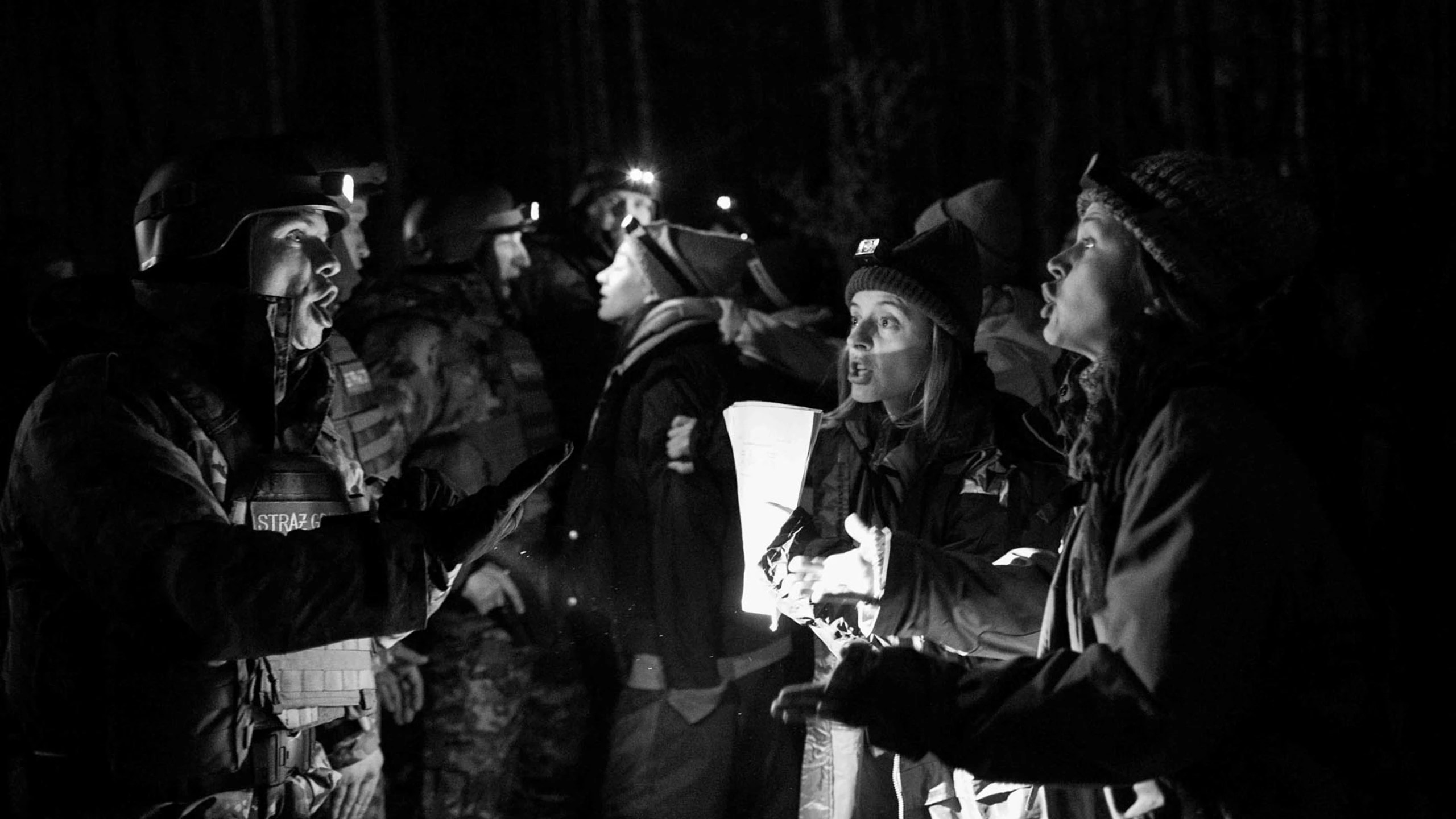
The word liberal is used as a pejorative at one point in the film. There are also other subtle swipes and Polish liberals who do not want to risk their creature comforts to stand up to their authoritarian government. Nice cars are more important than people dying, and this captures the real moral failings of our times and is emblematic of just how fascist movements are rising up so easily. A mentality of as long ‘as it’s not happening to me, it is okay’ is passive violence.
The movie ends flashing forward to a few years later. We see a completely different response from the Polish government and its soldiers, welcoming in as many Ukrainians as possible after the start of the war with Russia and providing logistical support for them to cross the border with ease. The difference between the two different lots of refugees is geopolitical but is also one of skin colour. What stands out in this final sequence is the profusion of people bringing their pets with them across the border. The message is clear: we treat POC refugees not as animals, we treat them worse than animals.
C.J. O’HARTE
Green Border was presented by Lotterywest Films for Perth Festival at Somerville Auditorium from 17 – 23 Mar 2025. For more information on this past event, click here.