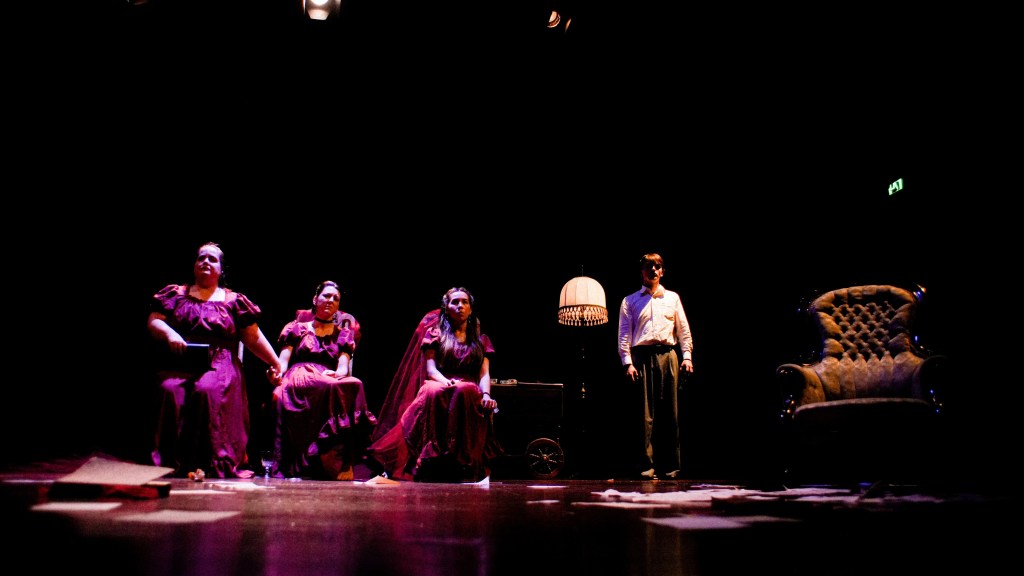
Tempest Theatre‘s dedication to approaching theatre history’s vaunted pillars with curiosity and reframing them using a feminist blueprint carries on with its complete reconstruction of Anton Chekhov‘s Three Sisters. With mighty swings, Tempest and director Susie Conte take a hefty mallet to the script and fill the freshly-made holes with the poetry of Russian poet Anna Akhmatova. The result of this bold endeavour is something dreamier and more elusive than your typical Three Sisters adaptation, and the titular siblings drift further into archetypes, and even into three facets of a singular ‘woman’.
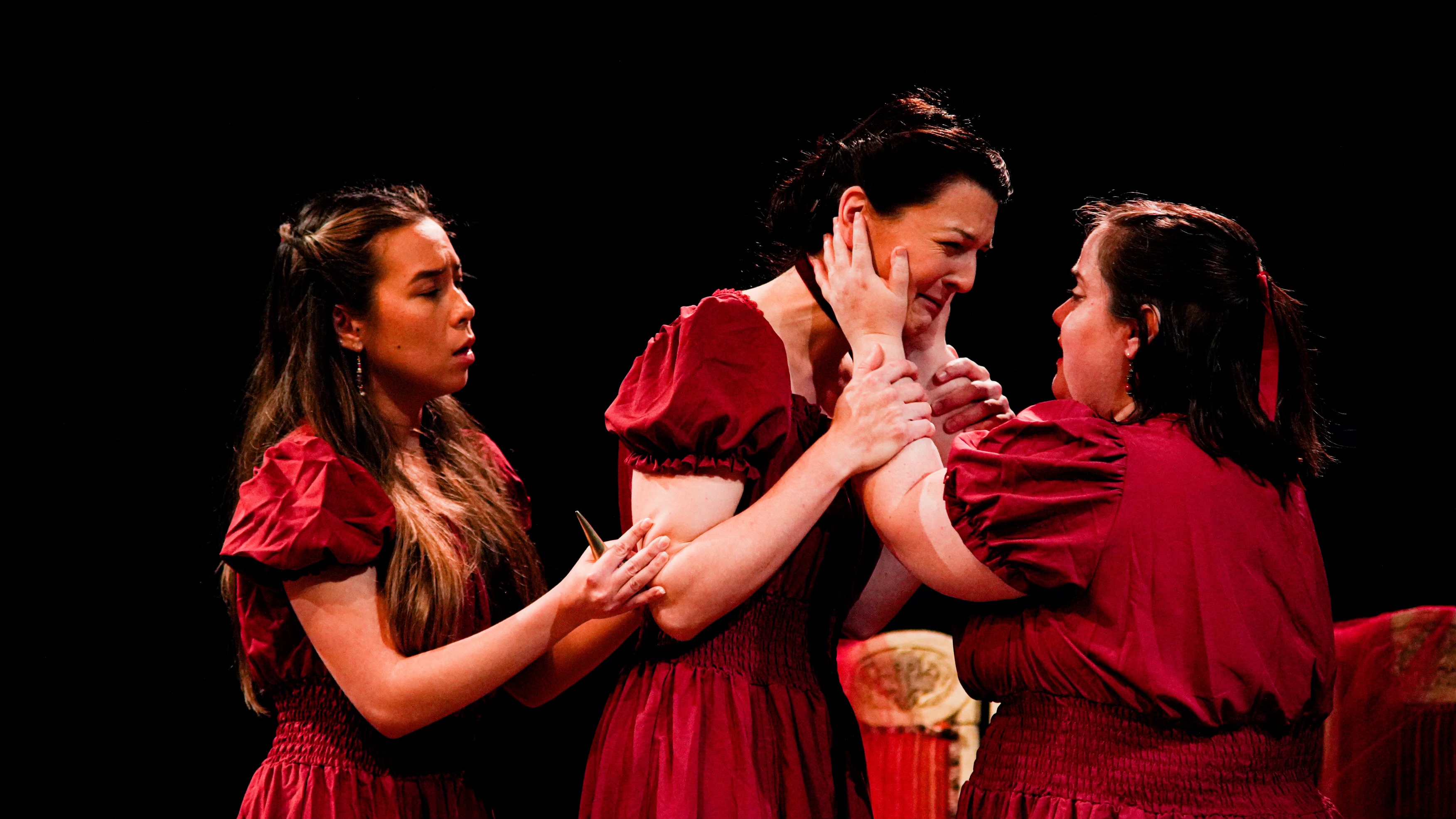
For those readers who didn’t sit through a theatre history class, Chekhov’s play centres around three young noblewomen, Irina, Masha, and Olga. They’re each in search of a life they can’t attain, and through the course of the play, must resign themselves to the lives that were handed to them by birth, circumstance, and, as Tempest’s production demonstrates, the suffocating grip of patriarchy.
Of course, when Chekhov wrote these three women into being, he enmeshed them in a complex web of other characters which Tempest’s production alludes to in name only, so that their voices, though prominent, were part of a chorus filled with both women’s and men’s plaints. In Tempest’s version, these three women are the chorus. However, Conte and Tempest do make one concession to the male voice by keeping Andrei, the sisters’ brother, in their adaptation. The programme notes tell us that Andrei’s presence is included as a means of demonstrating how “patriarchal systems affect men too.”
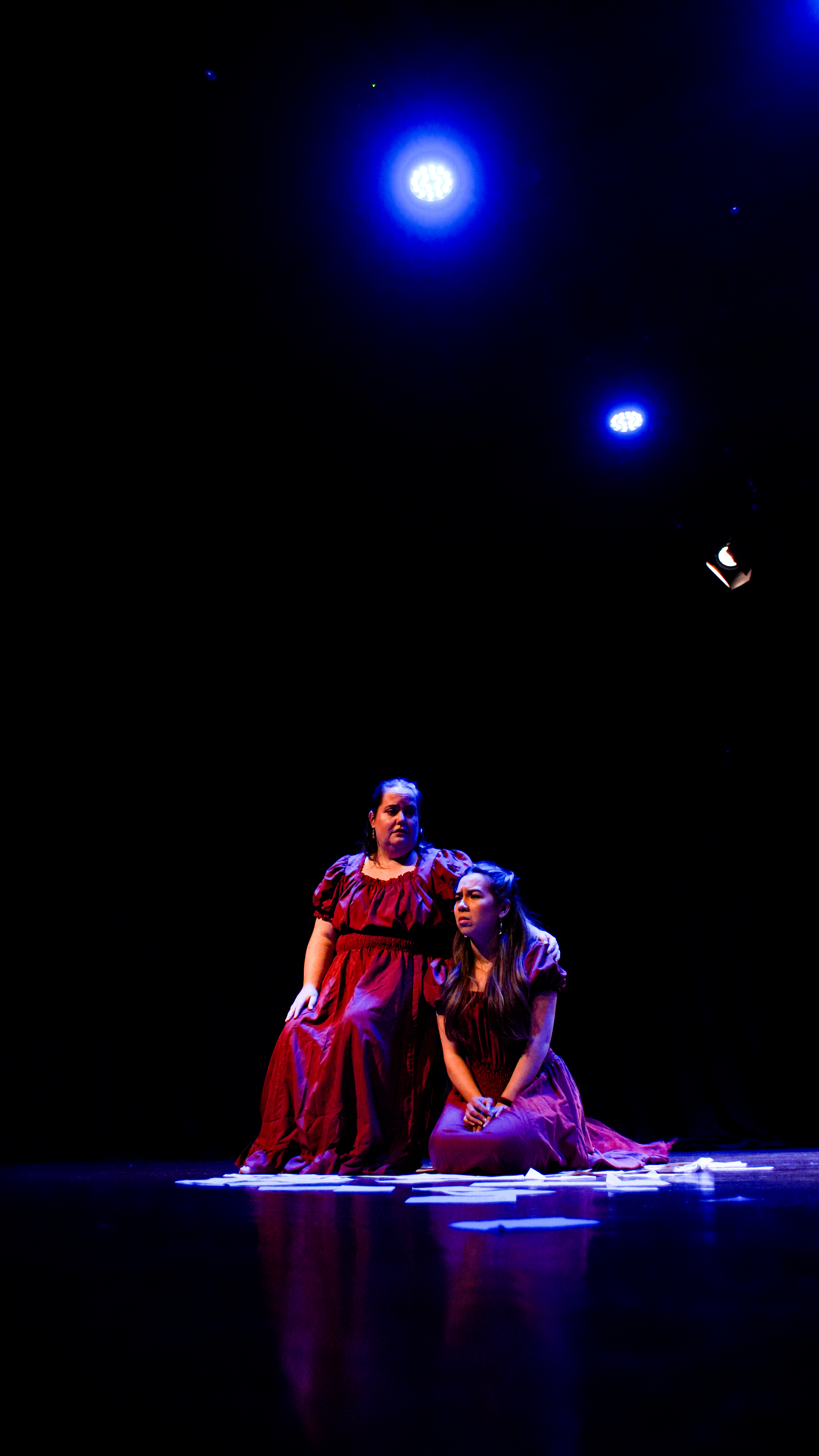
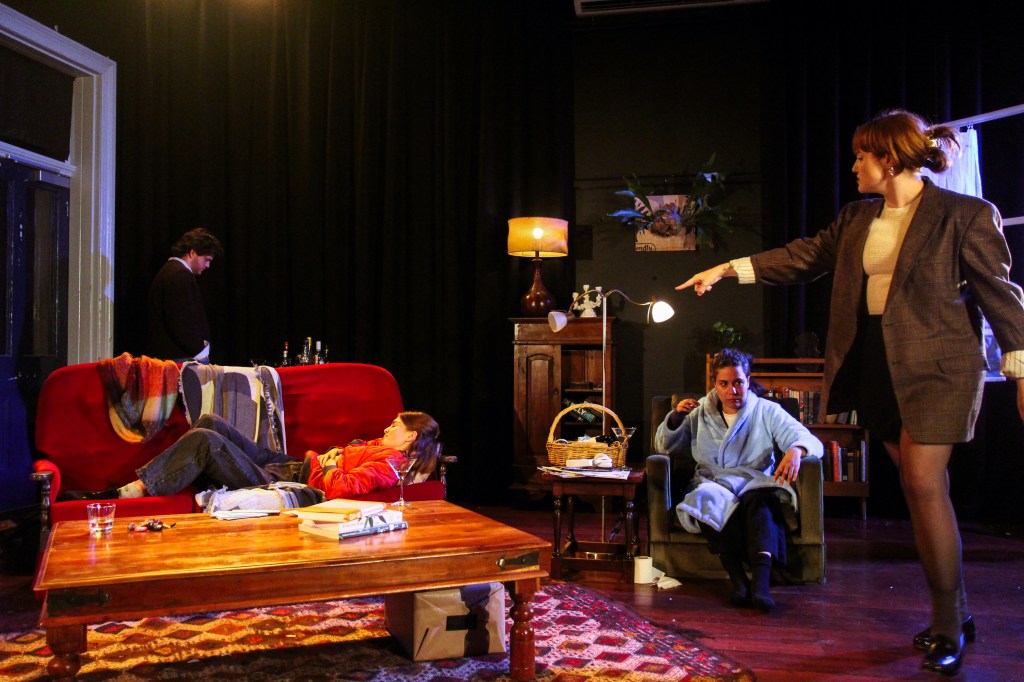
Olga (Amy Welsh) tries her hardest to keep the family on solid ground through adherence to tradition, self-effacement, and people-pleasing. Masha (Sarria Butler) tries her hardest to maintain an air of detachment through sarcasm and droll observations, but eventually it’s her attachments that drive her to the brink. Young Irina’s (Amanda Watson) chants of “Moscow” are eventually replaced by a mantra of “work”. Andrei (Luca Conte) philosophises and intellectualises in his stage-left lane while amassing debts that will pull the rug right out from under them.
On opening night, the ensemble took time to coalesce, with some uncertainty of cues and lines apparent as they found their rhythm. In these moments, we get an unobstructed glimpse at the beating heart of theatre making, though. On the whole, each actor gave truthful performances in their partner work as well as in their poetry-imbued monologues and soliloquies. They had a significant challenge laid before them: to make the tonal and textual shifts between script and poetry as seamless as possible. This was widely successful and enhanced by shifts in lighting (Katrina Johnston), sound (Luca Conte and Susie Conte) and movement.
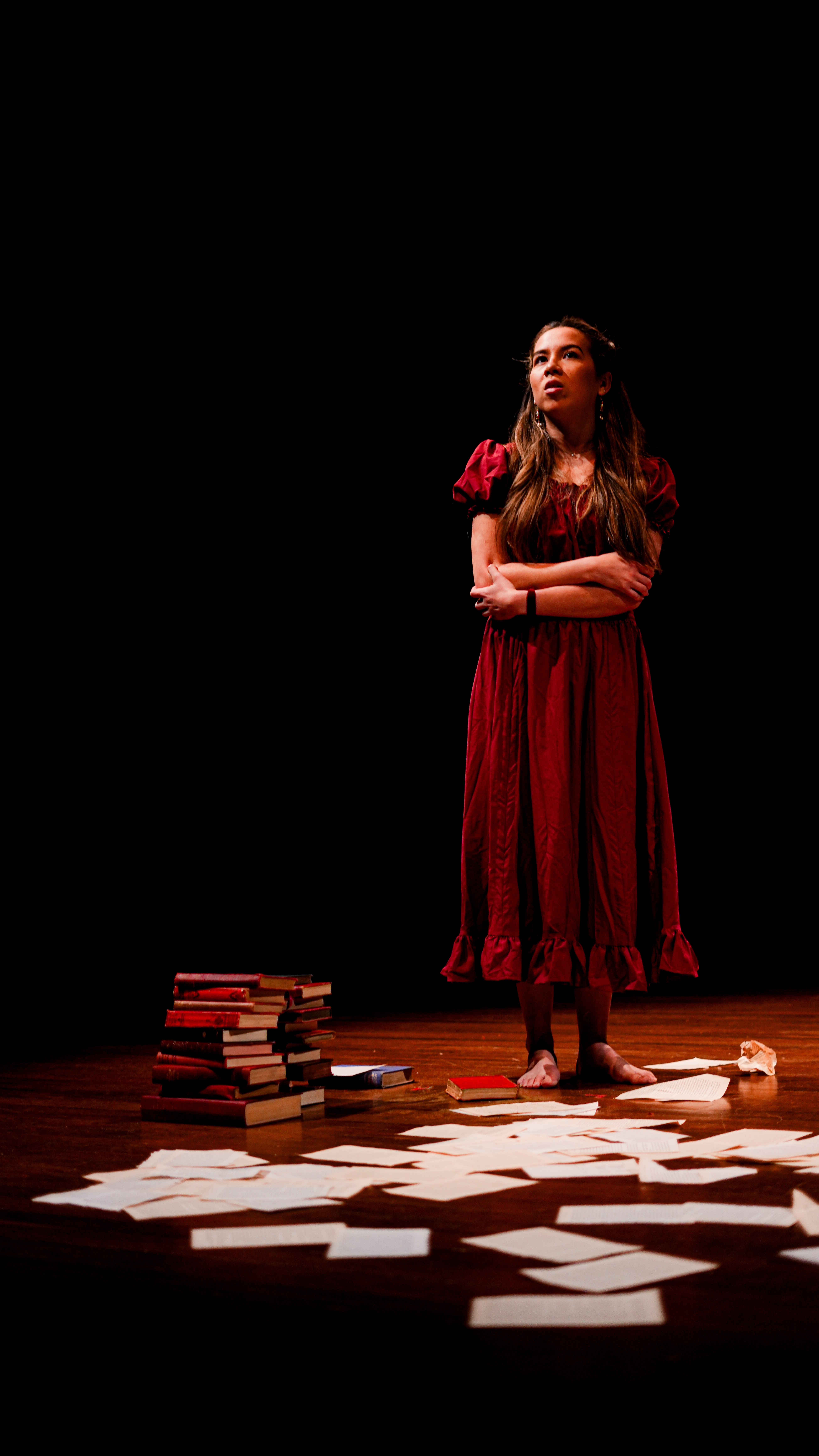
For my part, I found the experience of watching this adaptation of Three Sisters refreshing and even fun in so many places. The pining and whinging from Irina and Andrei came eerily close to the cacophony of a social media feed; many young folks are still desperately searching for meaning in a patriarchal, capitalist world, it seems. The three faces of sisterhood, presented here in the same red-coloured dress, conjured up all sorts of symbolic threes as I watched and listened, and then pondered upon for days afterwards.
The fact that Three Sisters can withstand such a massive structural overhaul and still pique our interest, raise salient points, and provide rich philosophical and thematic exploration, is a testament to the original work’s cultural significance and inherent strength. It’s no wonder that Tempest took on such a project, it’s got good bones.
CICELY BINFORD
Tempest Theatre’s Three Sisters was presented at Subiaco Arts Centre from 2 – 6 October 2024.