There’s no denying that mounting a play about dying is a real challenge. Death is inevitable, so everyone has experience with it, but that doesn’t make it any easier to tackle the subject, head-on, through an art form that specialises in catharsis. Not only does the producer have the duty of care to look after the well-being of everyone involved in the production, but they must also consider their intended audience’s experience. The question becomes, how do we tell a painful story safely? And beyond that, how do we tell a painful story about a universal truth that, ironically, could not possibly be encompassed in a single hour and a half, in a black box, in a small corner of the world?
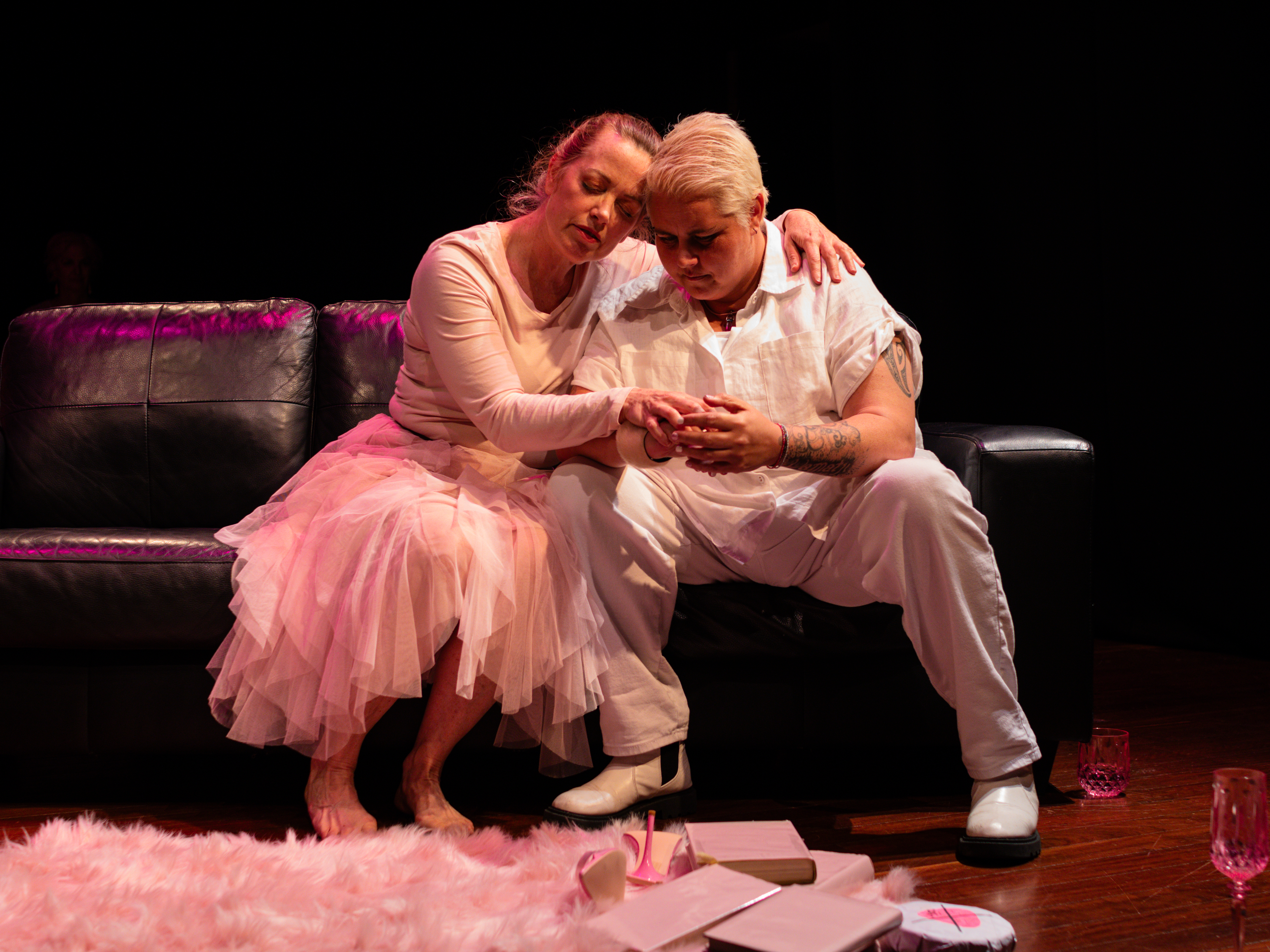
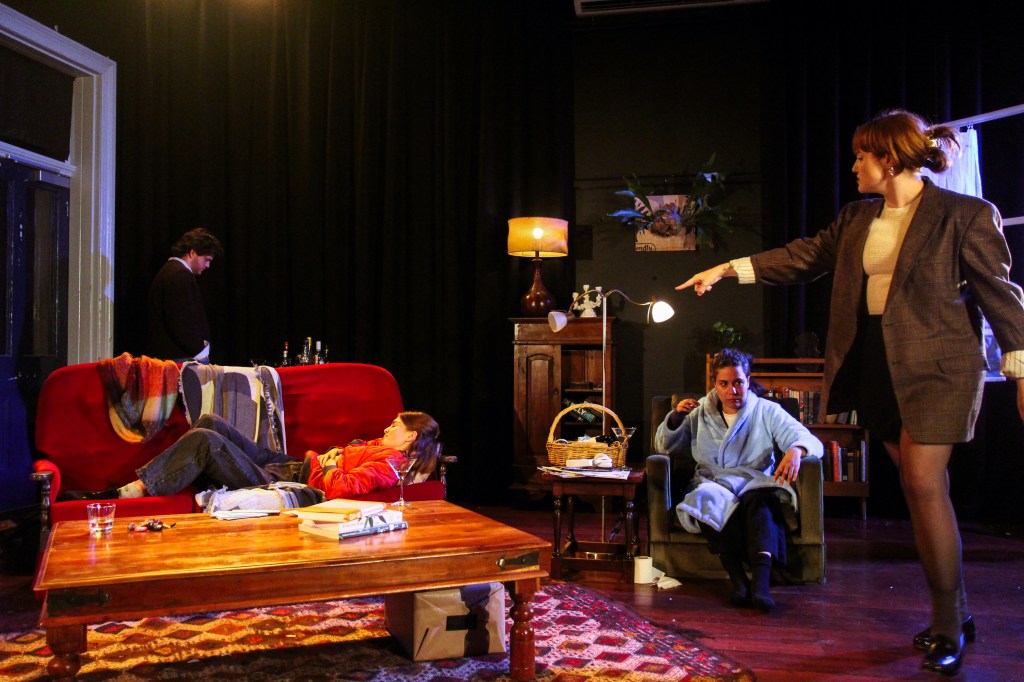
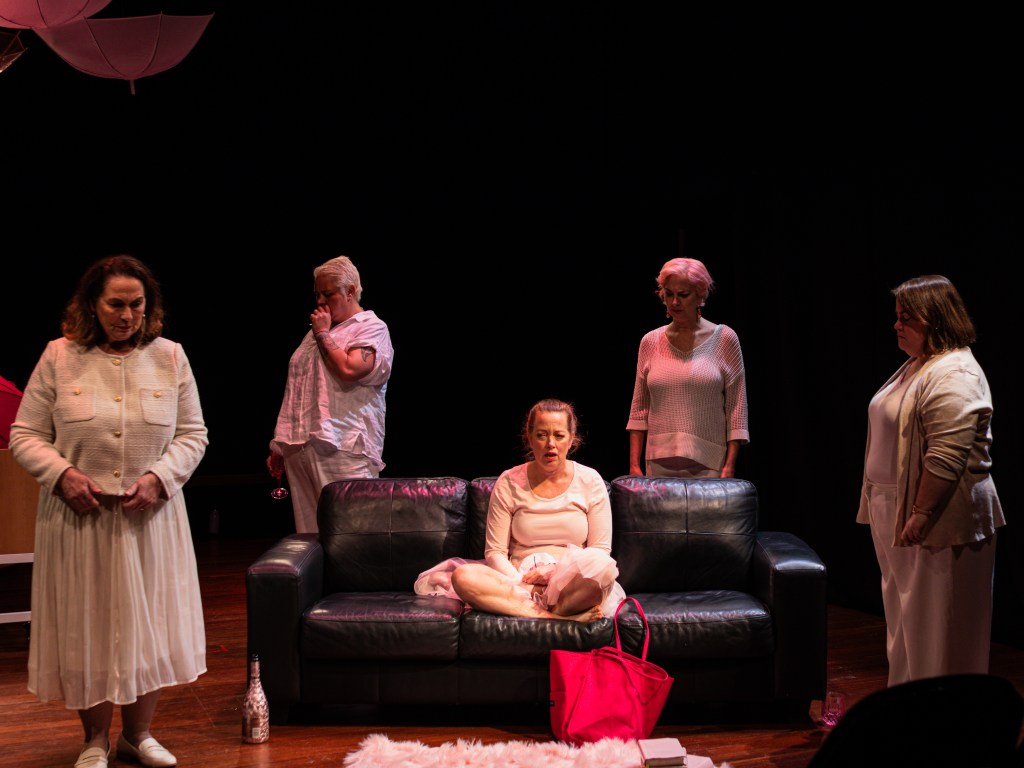
Tempest Theatre acknowledges the limitations implied in both questions and executes a loving version of a particular kind of dying scenario in its production of Kim Parkhill‘s A Good Death. This death story is centered around a Woman (played by writer Kim Parkhill), and those closest to her, as she learns how to die. As her journey unfolds, she discovers that her mother (Irene Jarzabek), her lover (Eva Grace Mullaly), her friend (Christie Sistrunk), and her doctor (Amy Welsh) are not as prepared to let go as she is. She wants death on her own terms, the same way she lived; her people want her to fight and hold onto life for as long as she can with every last breath, even though they all know deep down it’s a losing battle.

Parkhill, with lived experience in palliative care, writes what she knows. Her script is full of pathos, humour, and truthfulness, and offers a balance of these along with a balance of perspectives from within this play’s universe. In turn, she lives inside the character in a way that only she could as its creator; she finds a solid centre that holds even when the other characters falter and waver, push and pull, around her.
Tempest’s founder and director Susie Conte stages the show gracefully and tenderly with her signature touches throughout: monochromatic tones (costumes in white and props in pink), and subtle moments of physical theatre, such as when Jarzabek repetitively adjusts her skirt in slow motion while seated on stage out of scene. Conte makes use of a hospital bed as the major centrepiece of the set, shifting its position on stage throughout to create fluidity and subtly hint at the changing perspectives in the narrative.
The ensemble approached the text and each other with different performing styles, some more overt or mannered, some minimal. On one hand, this reflects the natural variety in the human persona, but in terms of ensemble performance, a more cohesive approach may have made the dialogue shimmer and the story sing even more.

This debut play, which was first performed in Parkhill’s native Canada in 2015, is a very strong piece of writing that would surely appeal to wider markets and companies. The Saturday matinee audience responded warmly to the piece, with laughs and some tears (a few of my own included). It struck a chord without leaning so heavily into catharsis that humour was neglected. It lends itself to further conversation about dying, which surely was one of the production and the playwright’s primary intentions. Tempest Theatre aims to provoke with its works; here, the provocation is a gentle nudge, an occasional playful poke, and an open-ended question.
CICELY BINFORD
A Good Death by Kim Parkhill was presented by Tempest Theatre at Subiaco Arts Centre from 16-20 July 2024.