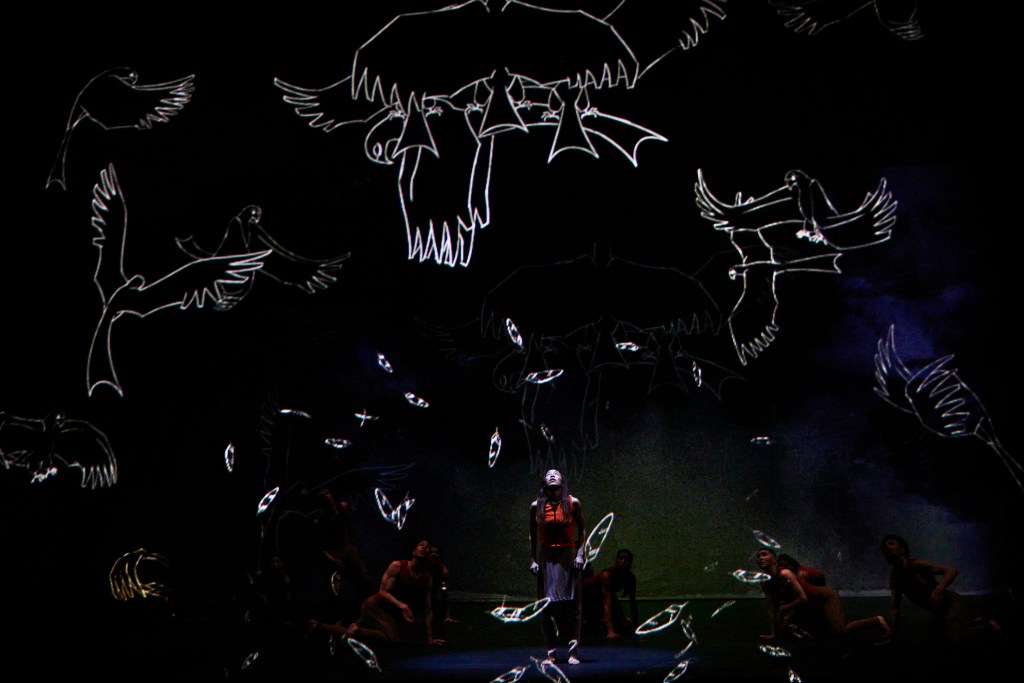
Perth Festival 2024’s opening weekend is absolutely packed with cross-disciplinary, cross-cultural productions that blend style, tradition, and genre to upend audience’s expectations of what live performance can be. Without question, Akram Khan‘s Jungle Book Reimagined is a main festival feature that delivers all of those qualities and more, with production elements that include hybrid dance styles, video animation, original music, voiceovers, and even a bit of puppetry. This abundance of creative output springing from the UK has been written, directed, designed and performed by artists from diverse cultural backgrounds and featured in festivals across the globe.
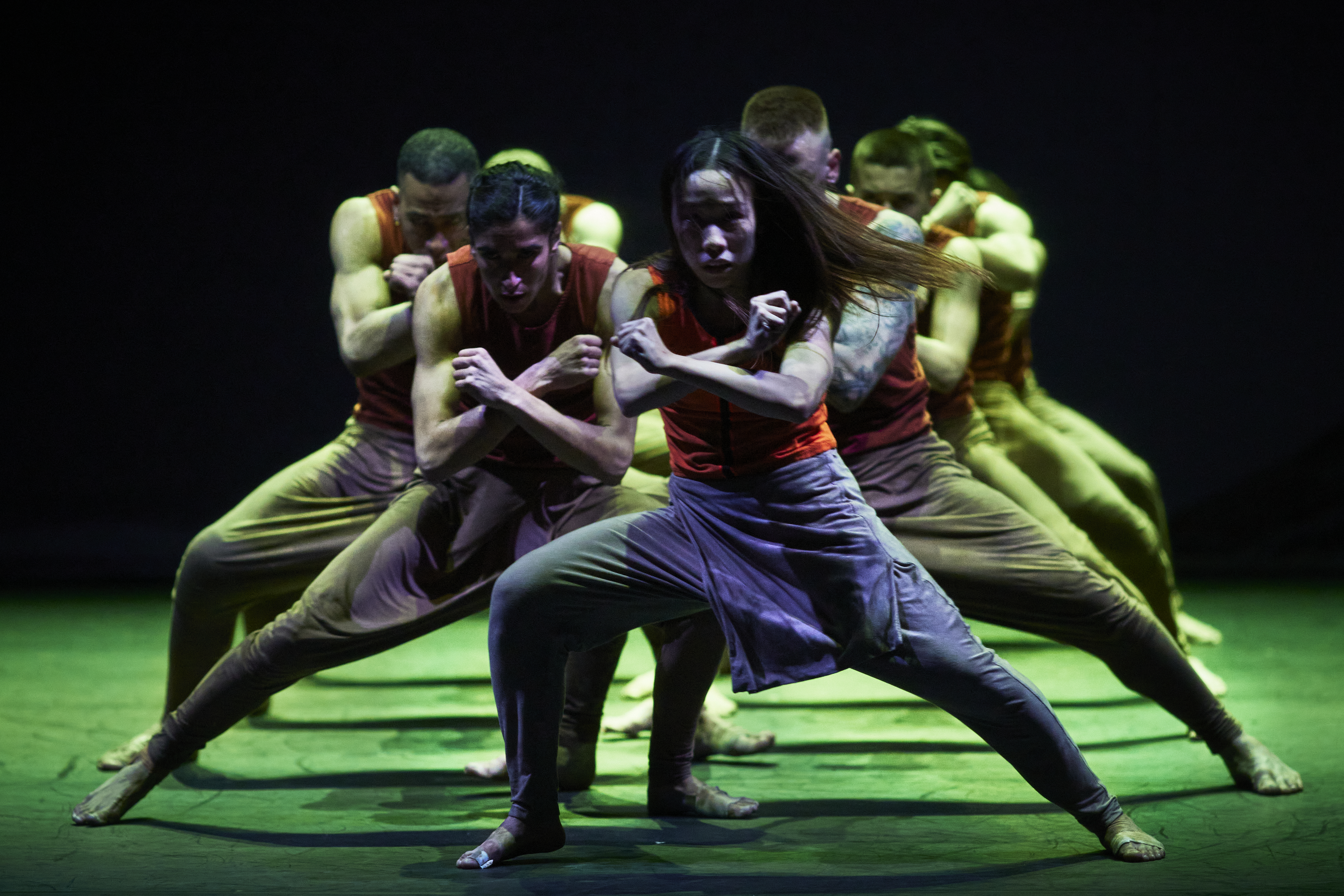
That being said, the creative team behind this production is as vast as it is diverse, so we may have a case of ‘too many cooks’ on our hands. The show’s various elements often fight each other for our attention, and in the end, it’s the story that suffers. From the start, there isn’t enough visual differentiation between Mowgli and the animals, either in movement or costume; this may be a deliberate choice to force the show’s point (humans need to remember we’re part of the animal kingdom too, so we’d better start acting like it). However, when the visual complications are compounded by audio complications, i.e., the voiceover dialogue, something’s bound to get sacrificed. A few folks spent part of the interval going over the show’s synopsis trying to catch up on what got lost.
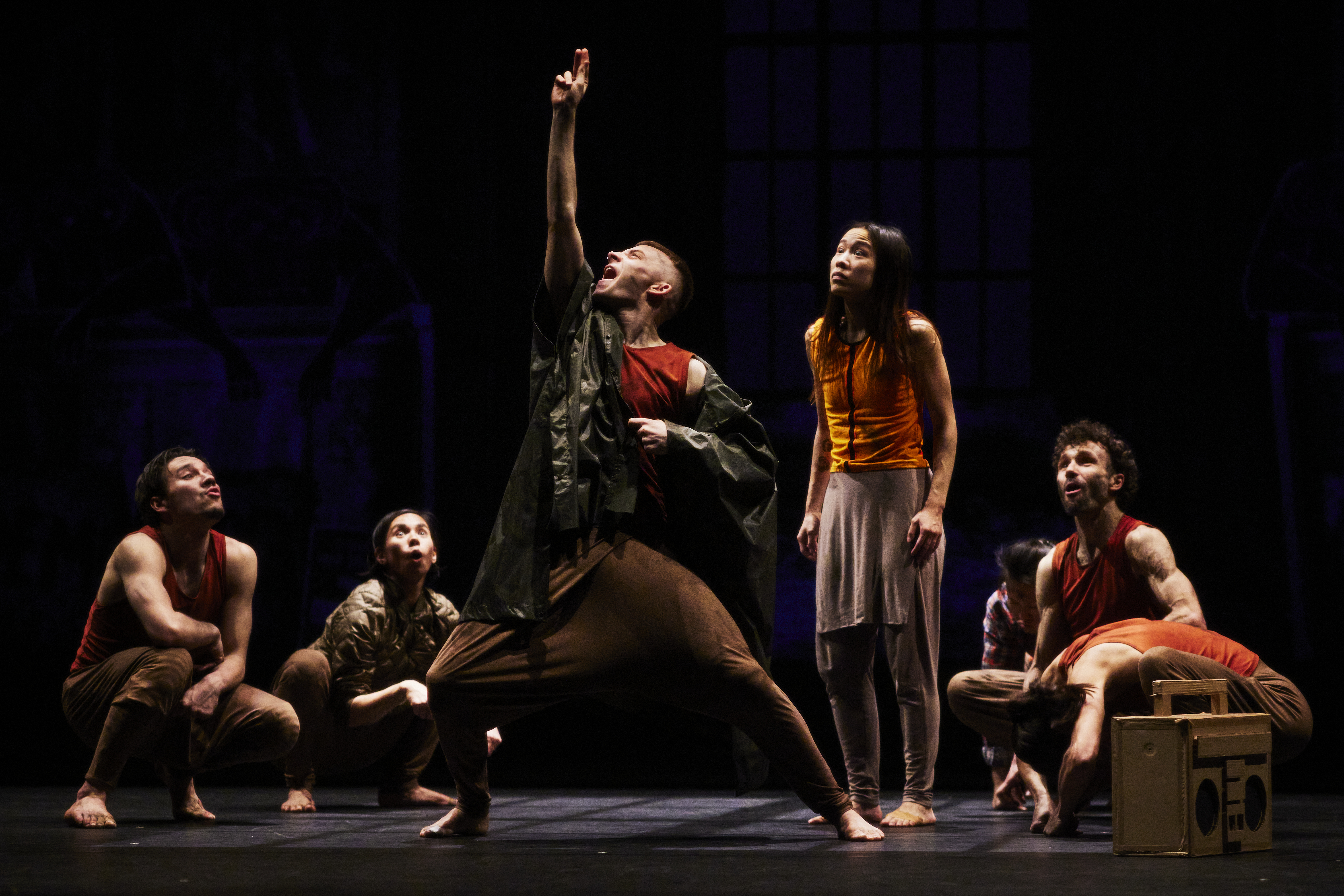
The animals’ dialogue (written by Tariq Jordan) is pre-recorded by twice as many voice artists as there are dancers on stage, which engenders an immediate disconnect between what we see, what we hear, and what we can process. The dancers move to the rhythm and beats of the spoken word rather than music for a healthy portion of the show, and they rise to this challenge admirably. There are musical interludes (composed by Jocelyn Pook) where the company dances as a whole, but often these don’t forward the narrative in any perceptible way, so they almost feel superfluous.
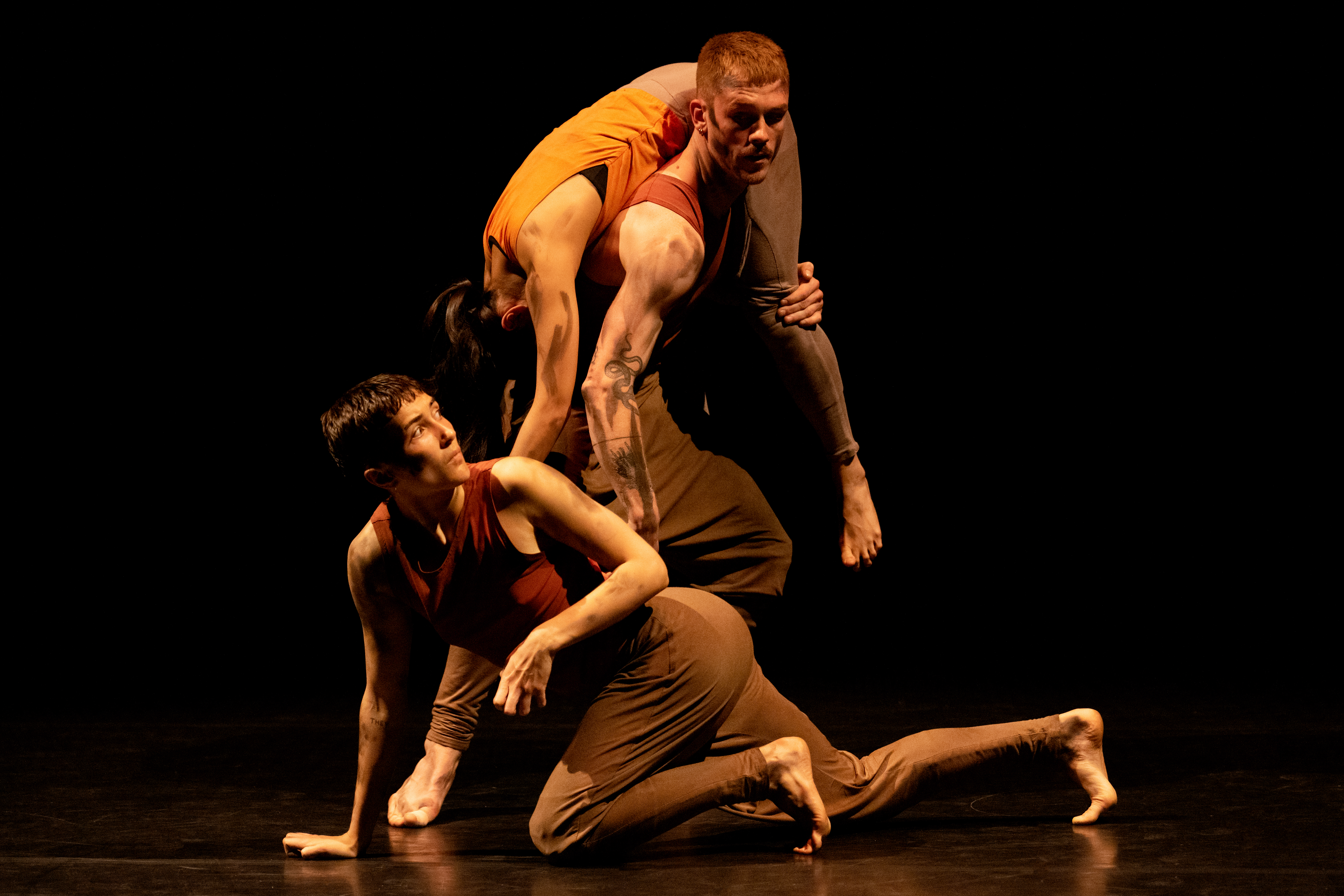
In terms of character portrayals, the dancers do a lot of crouching, stretching, crawling, and prowling in their various animal roles, but do no growling themselves. Baloo wasn’t lumbering and ponderous enough to be convincing as a bear, and Kaa the cardboard box python was more Cheshire Cat than slithering sneak. Perhaps if the dancers had been allowed to embody voice (even through non-verbal vocalisations) along with movement, this would have somehow helped to further mould and more clearly differentiate each animal from the other. This would of course drastically alter the script, but I wonder why we needed that much constant (mostly yelling) dialogue in the first place. Don’t actions speak louder than words?
The sound mix was uncomfortably loud, with gunshots ringing periodically all the way through and music that made the seats vibrate. The projected video elements (YeastCulture and others) were often a welcome delight that calmed the pace and gave the dancers a moment to pause during what was genuinely a marathon performance. Their ensemble and individual skills are phenomenal, but they are too precariously close to becoming secondary to all the other competing elements trying to push this story and its overt agenda forward.
Art is often meant to agitate, but it’s unclear who Jungle Book Reimagined intends to rile up. It’s far too dark for young children and far too didactic for adults, leaving teenagers as the likely target audience. Perhaps the best clue to who Khan is pitching the piece to can be found in the audio excerpts from Greta Thunberg’s speeches. In any case, overt messaging combined with overwrought staging and over-complicated storytelling make Jungle Book Reimagined a big, bitter pill to swallow, and one that should have been taken decades ago.
CICELY BINFORD
Jungle Book Reimagined runs until 17 February at Heath Ledger Theatre. For tickets and more information, visit here.