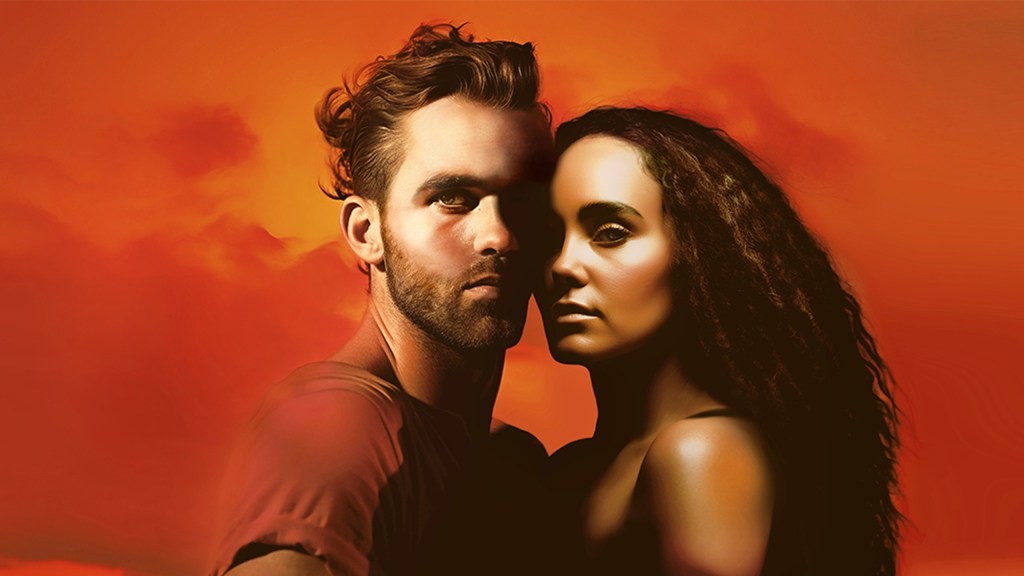
Perth Festival 2024’s opening weekend brings the world premiere of Gina Williams & Guy Ghouse‘s Wundig wer Wilura to His Majesty’s Theatre in association with WA Opera. Wundig wer Wilura is the second Noongar language opera commissioned from Williams & Ghouse by Wesfarmers Arts, the first being Koolbardi wer Wardong, which premiered in 2021 as part of the AWESOME festival.
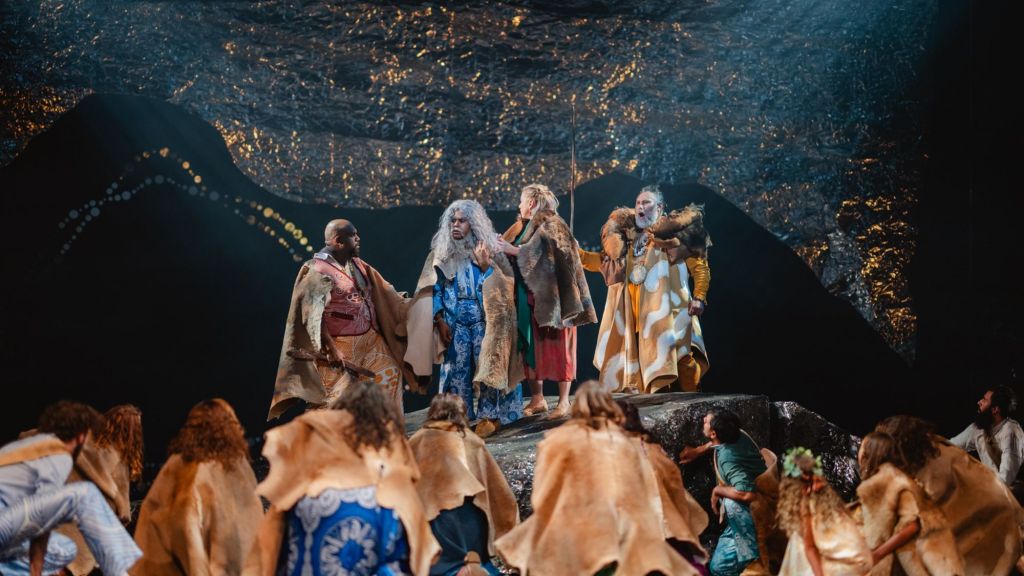
Wundig wer Wilura is based on the ancient Ballardong story of two hills, Walwalling (the place of tears, currently named Mt Bakewell) and Wongborel (sleeping woman, currently named Mt Brown), in what is known in our post-colonial times as the town of York. The story begins with an elder, the Burdiya, whose family grew and prospered under his guardianship, to the point where his sons needed to branch into new boodja in order to sustain their families. The sons’ families continue to flourish in their new settlements in the hills and the valley, but the Burdiya is growing ill, so his sons are called back to country to pay their respects to him.
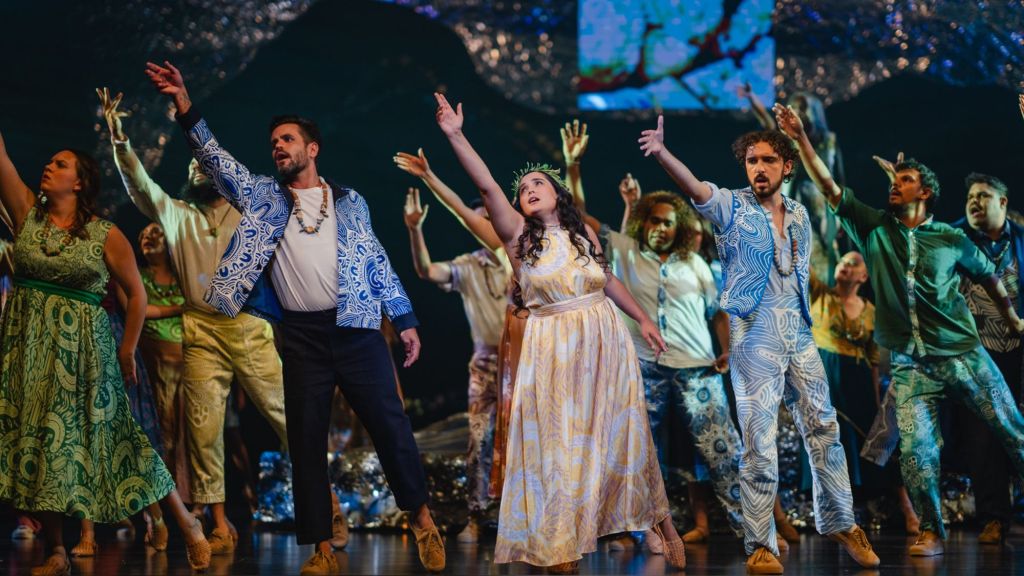
When the Burdiya’s families are reunited, Wundig, a young man from the hill family, encounters Wilura, a young woman from the valley family. They instantly fall in love, but their union is forbidden by custom, so they run off together, despite the warnings and protestations from their kin and both of their intended betrotheds. Wilura’s family believes Wundig’s family is hiding Wilura, which causes a fight between the families. Two women of the valley people seek out help from the Mubarn (a spirit man) to end the fighting; he intervenes and ensures that Wundig and Wilura can never reunite by banishing their spirits to two separate resting places, Walwalling and Wongborel, and makes a river run between them.
Tales of star-crossed lovers can be found in so many legends across time and around the globe, but surely none are as ancient as this story from Ballardong Noongar country. Williams and Ghouse have captured so much humour and pathos through their music and lyrics in telling the story of Wundig and Wilura, bringing touches of light and warmth to what is ultimately quite a sad tale. A parallel in modern Western culture that immediately springs to mind is the tragedy of Romeo and Juliet, and though this draws perhaps too facile a comparison, it could be helpful in bridging gaps for audiences who might need a familiar trope to draw them into Wunding and Wilura.
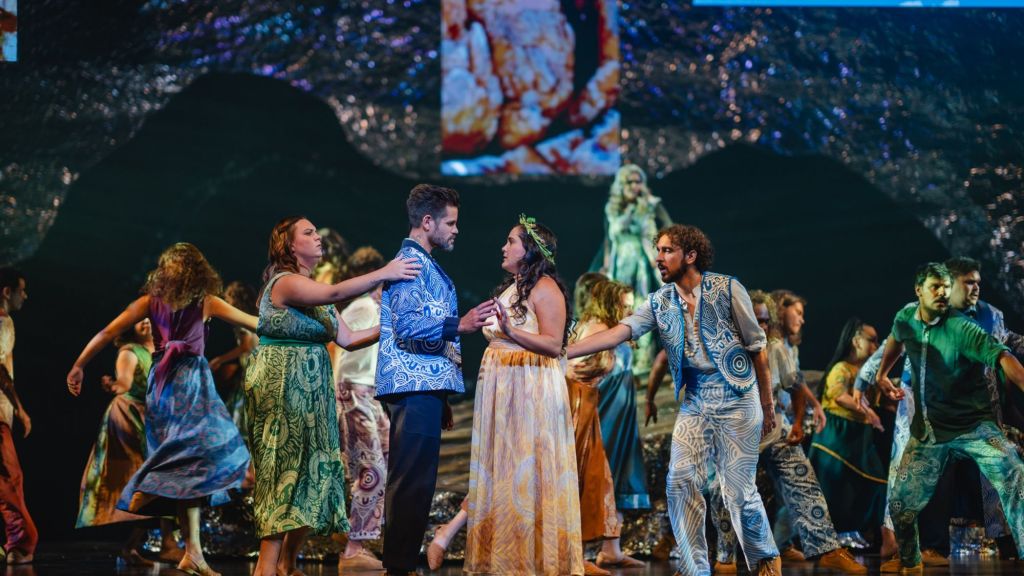
In any case, Williams and Ghouse’s music is beautifully arranged and orchestrated by Dr Chris Stone, and under the baton of conductor Aaron Wyatt, the orchestra (WASO) and company bring so much colour, texture, and life to the story. There are catchy tunes, haunting melodies, and sublime duets, especially those sung by Wundig (Jarred Wall) and Wilura (Jess Hitchcock), that showcase these performers gifts as well as convey the tangible, warm connection between them.
The other significant figures in this story, the Burdiya, the Mubarn, the sons, the female elders, and the jilted betrotheds, all bring a range of talents, vocal styles and authenticity to the stage. David Leha portrays the Mubarn with an unequalled magnificence and gravitas ; Charley Caruso as Wilura’s mother brings a gorgeous, soulful sound to the mix; and in the role of the old man, Ronald Dick‘s bright, flexible tenor soars to beautiful heights. Local theatre treasure Della Rae Morrison as Wilura’s nanna takes the spotlight in a cheeky, flirty song with the refrain “Djiripin, djiripin, djiripin”, where she uses humour to send a warning to the young lovers and tickle the audience’s funny bone, too.
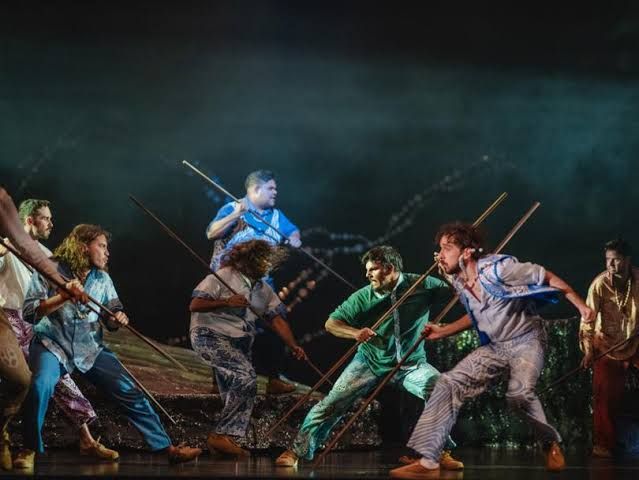
Another legend of local stages, Ian Wilkes, lends his prodigious dance skills to the production in the role of choreographer, but also joins the ensemble; he blends traditional and contemporary dance in a unique way to add another dimension to the storytelling. Matt McVeigh‘s set design allows for flexibility in story location through the use of suspended video screens and a central, sparkling granite-like raked platform that is moved and reconfigured throughout the show. Mark Howett‘s lighting and video content is equally transformational, with transverse moving lights beaming from off stage left and a deus-ex-machina style moment with a descending truss. Costumes and cultural props by Peter Farmer Designs and Rae Cottam showcase a beautiful palette that reflects the colours of the land and indicates familial ties, while the garments borrow from Western silhouettes to create a collage of styles. The Mubarn’s costume is particularly visually striking, and the centerpiece of the collection to be sure.
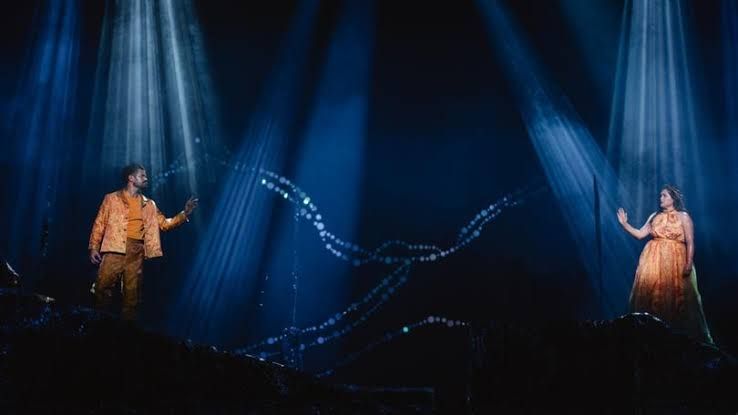
Once the emotionally and visually poignant closing duet between Wundig and Wilura has been sung, the cast is joined on stage by Williams & Ghouse and other members of the production team, while the enraptured audience gives this well-deserving production a warm standing ovation. Wundig wer Wilura is a significant arts and cultural landmark work that welcomes everyone into spaces, institutions, and traditions that have for too long been as divided as Wundig and Wilura.
CICELY BINFORD
Wundig wer Wilura runs at His Majesty’s Theatre from 9 – 15 February. For tickets and more information visit here.